Project
All projectsUraluotsi
A digital job-search coach concept that helps jobseekers clarify direction, describe their skills and keep the next step visible.
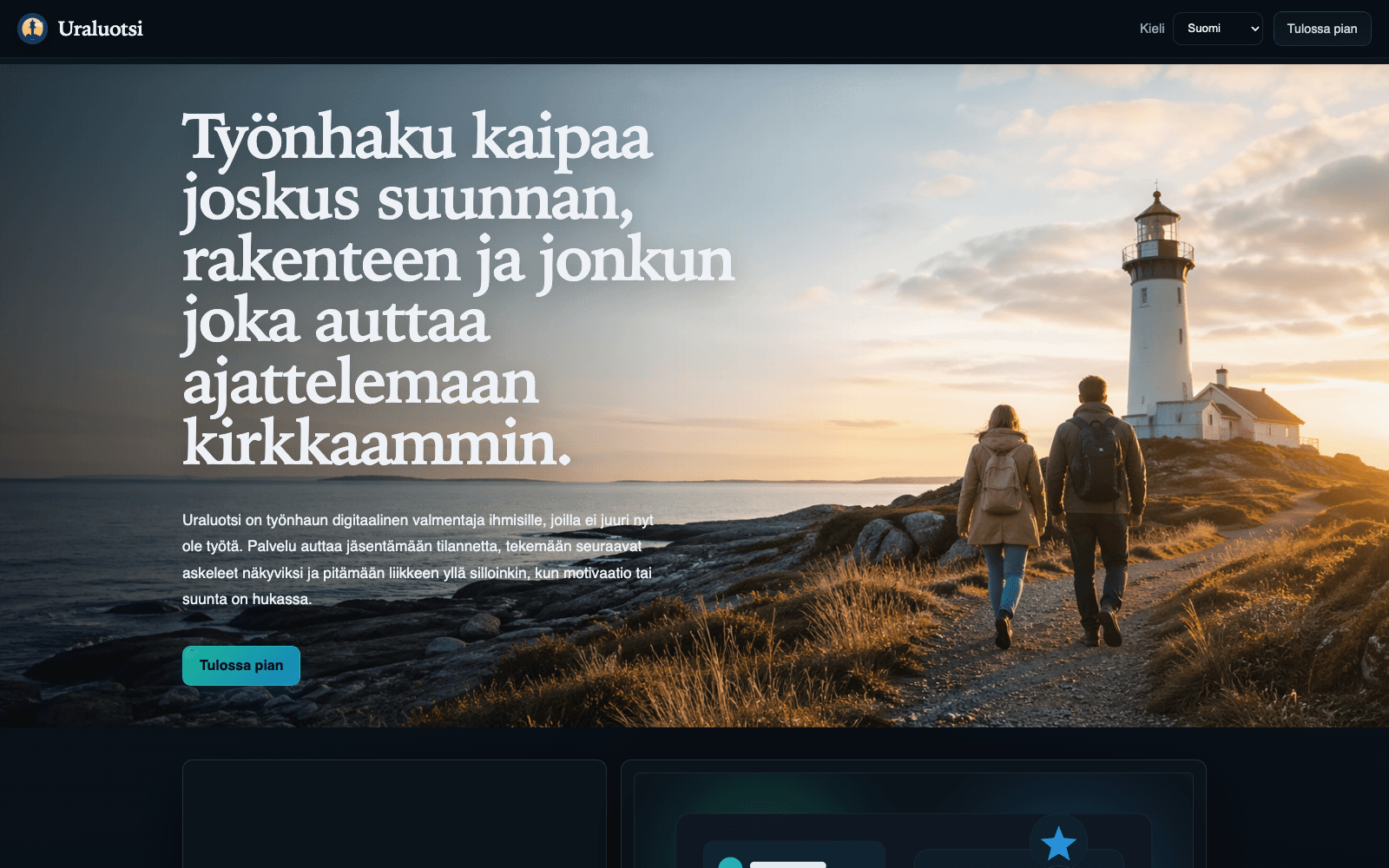
Uraluotsi is a digital coaching concept for people looking for work. The focus is narrow on purpose: help a jobseeker make sense of their situation, describe their skills clearly and keep the next step visible.
Job-search support often becomes too generic or too administrative. Uraluotsi takes a more human route. It is a coach for uncertainty, not just a checklist for applications.
What it is
The public page positions Uraluotsi as a digital job-search coach for unemployed jobseekers. It is built around the moments where people often get stuck: unclear direction, hard-to-explain skills, weak rhythm, low motivation or uncertainty about what to do next.
The product promise is practical. It helps clarify the next step, turn skills into language that works in CVs and interviews, and maintain momentum without pretending that job search is a neat, linear process.
Why it stands out
The useful design choice is the narrow audience. Uraluotsi is not trying to be a broad HR platform, employer tool or productivity system. It is aimed at the person looking for work.
That matters because job search is not just an information problem. People may be blocked by fatigue, shame, too many options or not knowing how to turn their experience into a clear story. A useful digital coach has to respect that mess instead of dumping a generic plan on top of it.
Product mechanics
The concept combines:
- Situation framing for the jobseeker
- Next-step clarification
- Skill language for CVs, applications and interviews
- Rhythm and focus support
- Trust-building language for unfinished situations
- A narrow service identity around one audience
That focus is the strength. It makes the product easier to understand, position and improve.
Why this matters for clients
Uraluotsi is a useful example of digital support built around a real human workflow, not a technology feature looking for a home.
It demonstrates how to:
- choose one clear audience
- translate a messy workflow into practical support
- use coaching-style interaction without exaggerated promises
- grow from a focused first use case
- build trust through language, pacing and boundaries
For AI and digital coaching products, the better starting question is not “what can the system generate?” It is where does the person get stuck?